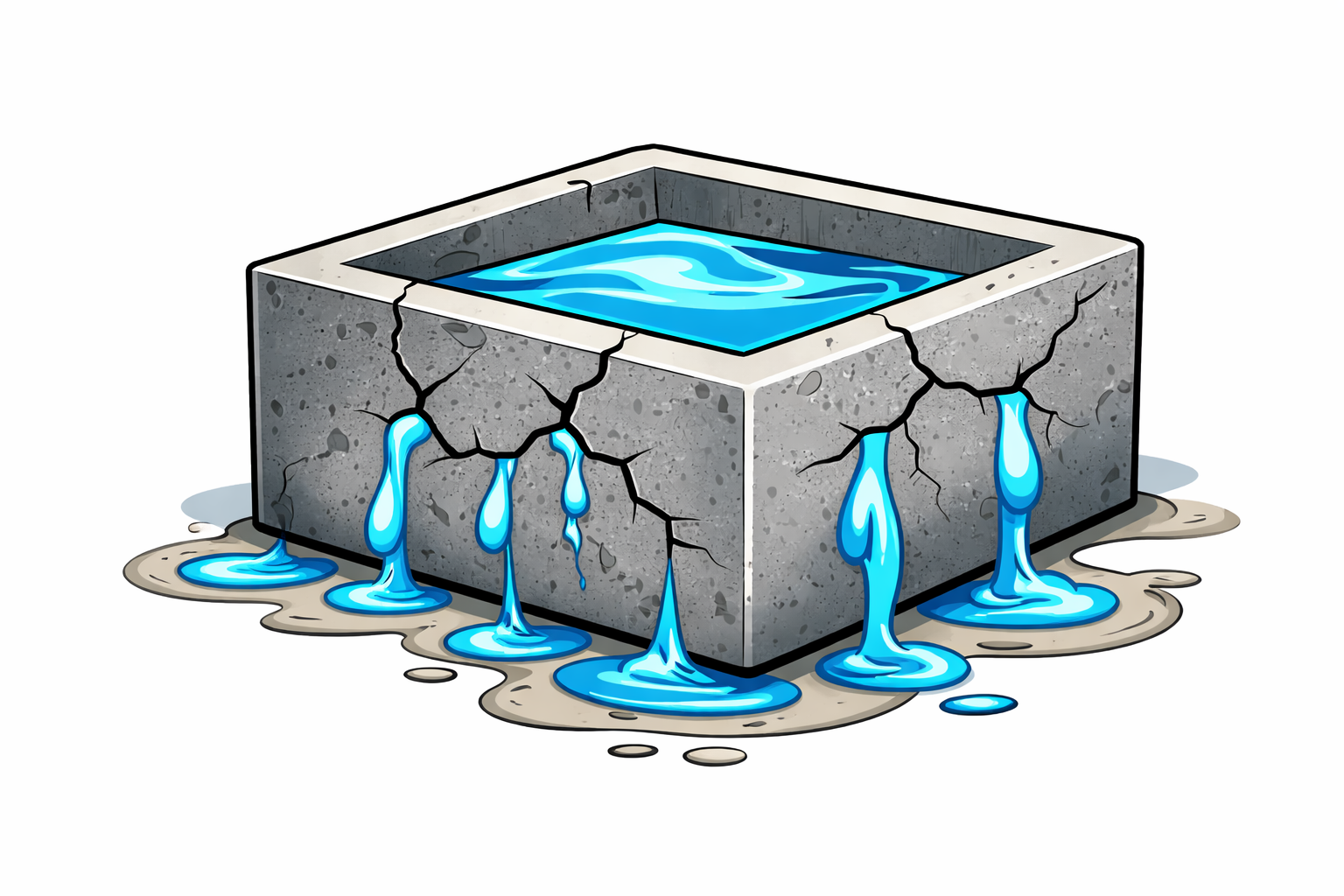
How to Waterproof a Concrete Pond
Learning how to waterproof a concrete pond is essential for maintaining a leak-free environment. Concrete ponds are strong and long-lasting, but concrete itself is naturally porous. Over time, small cracks, surface voids, and natural moisture movement can allow water to escape. Proper waterproofing protects the structure of the pond while helping maintain a stable environment for fish and aquatic life.
Waterproofing a concrete pond typically involves three key steps: repairing any structural cracks, properly preparing the concrete surface, and applying a waterproof coating designed for aquatic environments. When done correctly, this process can provide long-term protection and help prevent leaks.
Why Concrete Ponds Leak
Concrete is an excellent building material, but it is not naturally waterproof. Even properly constructed ponds can develop leaks over time due to several factors. One common issue is the natural porosity of concrete. Small surface voids and microscopic pores can slowly allow water to migrate through the structure. While this movement may be minimal at first, it can become more noticeable as the pond ages.
Structural movement can also cause hairline cracks to form in the concrete. These cracks may develop from ground settling, temperature changes, or normal expansion and contraction of the structure. In addition, poorly prepared surfaces or failing sealers from previous coatings can contribute to water loss. Without proper preparation and repair, even high-quality coatings may struggle to bond correctly to the concrete.
Methods for Waterproofing a Concrete Pond
Several different methods are commonly used to waterproof concrete ponds and water features. Some pond builders install flexible liners inside the structure to create a physical barrier between the water and the concrete. While liners can be effective in certain applications, they may require additional framing or structural support depending on the design of the pond. Cement-based sealers are another option and are often used to reduce surface permeability in concrete structures. These products may not always provide the same long-term durability as bonded coatings designed specifically for waterproofing.
Epoxy pond coatings are formulated to bond directly to properly prepared concrete surfaces, creating a continuous waterproof barrier. Products such as Pond Shield epoxy coating are designed specifically for ponds and water features. When applied correctly, these coatings provide a durable protective layer that helps prevent water migration through the concrete.
Preparing the Concrete Surface
Proper surface preparation is one of the most important steps in waterproofing a concrete pond. Before applying any coating, the surface should be thoroughly cleaned to remove dirt, algae, oils, or other contaminants that could interfere with adhesion. Concrete surfaces are often acid etched to open the pores of the material and create the correct surface profile for coating adhesion. This process removes residual surface compounds and helps ensure the coating bonds properly to the concrete.
Any visible cracks or structural defects should also be repaired before waterproofing begins. Even small cracks can allow water to escape and may cause coatings to fail if they are not addressed beforehand. Repair materials designed for concrete, such as Crack RX, can help restore structural integrity and seal damaged areas. Taking the time to properly repair cracks and prepare the surface greatly improves the long-term performance of the waterproofing system.
Applying an Epoxy Pond Coating
Once the surface has been properly prepared and any cracks repaired, a waterproof coating can be applied. Epoxy pond coatings are typically applied in a controlled layer to create a bonded waterproof barrier across the entire surface of the pond. When applied following the instructions, these coatings form a durable protective layer that helps prevent water migration through the concrete. Products such as Pond Shield epoxy coating are designed specifically for ponds and water features and are formulated to provide long-lasting waterproof protection when applied to properly prepared surfaces.
Many pond waterproofing issues occur when key preparation or application steps are skipped or rushed. Even high-quality coatings can fail if they are applied incorrectly or to poorly prepared surfaces. Understanding the most common mistakes can help ensure the waterproofing system performs as intended and lasts for many years.
Common mistakes when waterproofing a concrete pond include:
• Applying coatings to poorly prepared surfaces. If the concrete is not properly cleaned and etched, coatings may not bond correctly and can fail prematurely.
• Failing to repair cracks before coating. Structural cracks should always be repaired prior to waterproofing to prevent water from escaping through damaged areas.
• Improperly mixing epoxy coatings. Mixing directions must be followed carefully to ensure the coating cures correctly and performs as designed.
• Applying coatings in improper environmental conditions. Temperature and moisture levels can affect curing and long-term durability, so coatings should be applied within the recommended conditions.
Taking the time to properly prepare the surface, repair cracks, and follow product instructions helps ensure the waterproofing system performs reliably.
Planning a Pond Waterproofing Project
When planning a pond waterproofing project, it is important to carefully evaluate the condition of the existing structure. Identifying cracks, damaged areas, and surface contaminants early helps determine the preparation and repair steps that may be required before coating begins. Proper planning allows pond owners and contractors to address potential issues before they become larger problems. Taking the time to assess the condition of the concrete helps ensure the waterproofing system performs as intended.
Repairing cracks, properly preparing the concrete surface, and selecting a coating designed specifically for ponds are all critical steps in the process. Each step works together to create a durable waterproof barrier that protects the pond structure. Skipping preparation or repair work can reduce the effectiveness of even high-quality coatings. Following recommended procedures helps ensure the waterproofing system performs reliably for years to come.
For more detailed information about preparation, application, and product selection, visit the Pond Armor FAQ or explore the product pages for additional guidance.
Planning to waterproof a concrete pond?
Explore the Pond Shield epoxy coating system designed to protect concrete ponds, fountains, and water features with a durable waterproof barrier.