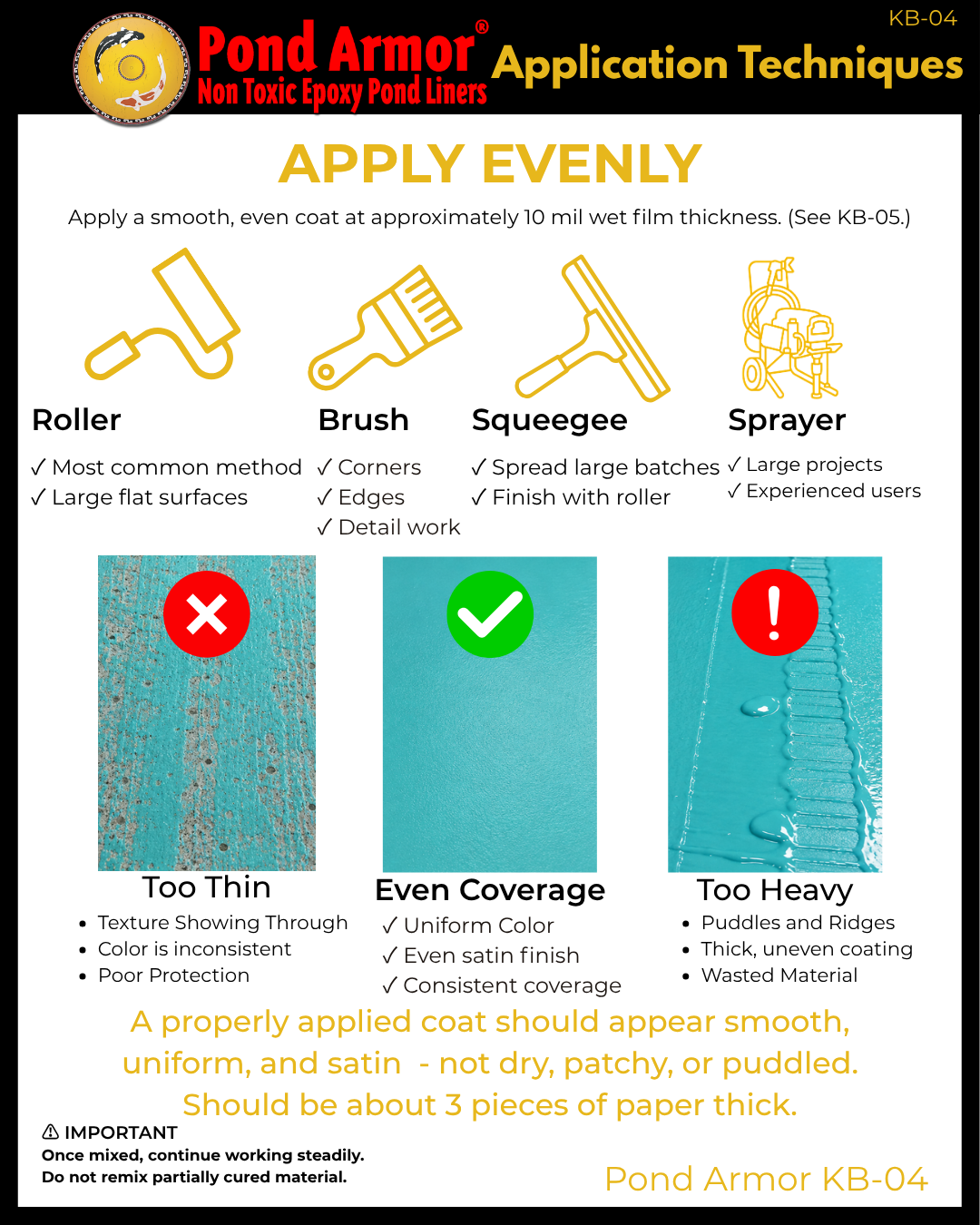
KB-04: How to Apply Pond Shield Epoxy Coating
Once the surface has been properly prepared and Pond Shield has been thoroughly mixed, you are ready to begin application. Proper application is important because Pond Shield is not simply being used like ordinary paint. You are creating a continuous waterproof epoxy coating that needs consistent coverage across the entire prepared surface.
During application, focus on maintaining an even layer of material rather than trying to stretch the coating as far as possible. The wet coating should have a consistent satin appearance without obvious thin spots, dry-looking areas, puddles, or excessive buildup.
Work in Manageable Sections
Apply Pond Shield in sections that allow you to maintain control of the material and inspect your work as you go. Trying to cover too large of an area at once can make it easier to overlook thin areas, transitions, corners, or other details that may require additional attention.
If using a roller, load it evenly and apply the coating using controlled, overlapping passes. Reload the roller as needed rather than continuing to roll once the material begins to run out.
Working systematically also helps maintain a consistent appearance between sections and makes it easier to identify areas that need attention before moving forward.
Look for an Even Satin Appearance
One of the easiest ways to monitor Pond Shield during application is to watch the appearance of the wet coating.
A properly coated area should have an even, consistent satin appearance. Large differences in appearance across the surface can indicate differences in the amount of material being applied.
If an area begins to look noticeably dull, transparent, patchy, or lighter than the surrounding coating, the material may be getting too thin. If material begins collecting heavily in one area, forming puddles, runs, or excessive buildup, it should be redistributed while the coating is still workable.
Watch for Thin Spots
Thin spots can develop when a roller begins running out of material or when excessive pressure is used to spread the remaining coating farther across the surface.
Pay especially close attention around corners, edges, textured areas, repairs, transitions, plumbing penetrations, and other areas where the surface changes. These locations can be easier to miss than large, flat sections.
If the roller is no longer depositing a consistent amount of material, reload it instead of continuing to stretch the coating.
Avoid Puddles and Excessive Buildup
Applying more material in one area does not compensate for applying too little somewhere else. Pond Shield should be distributed consistently across the surface.
Watch low areas, corners, and the bottoms of vertical surfaces where material can naturally collect. If you notice a puddle, run, or unusually heavy section, redistribute the excess into the surrounding area while the coating remains workable.
The goal is a uniform coating rather than alternating areas of heavy and thin application.
Pay Attention to Edges and Detail Areas
Large open surfaces are generally easier to coat consistently. Corners, edges, penetrations, and other detailed areas require more deliberate attention.
Use an appropriate application tool where a roller cannot adequately reach, and make sure these areas receive the same careful coverage as the surrounding surface. When transitioning between a brush and roller, blend the sections together so that gaps or visibly thin areas are not left between them.
Inspect Your Work as You Apply
Periodically stop and look back across the area you have just coated. Viewing the surface from a slight angle can make differences in coverage easier to identify.
During application, you are primarily looking for three conditions:
- Good: An even, consistent satin appearance.
- Too Thin: Dull, patchy, transparent, or noticeably lighter areas.
- Too Heavy: Puddles, runs, or excessive material buildup.
Correcting these differences while the coating is still workable is easier than discovering them after the project has cured.
Remember: Coverage and Thickness Work Together
A surface that simply looks covered is not necessarily coated to the proper thickness. Application technique and coating thickness work together to create the finished Pond Shield system.
KB-05 covers coating thickness in greater detail and provides a visual reference for understanding the approximately 10 mil finished thickness Pond Shield is designed to achieve.
Continue Through the Pond Shield Knowledge Base
Review the previous mixing and preparation steps, or continue to the Pond Shield thickness guide after completing application.
KB-00: Before You Begin
KB-00A: Before You Mix Checklist
KB-01: Pond Shield Quick Start
KB-02: Surface Preparation
KB-03: Mixing Procedures
- KB-03A: Mixing Safety
Pond Shield Knowledge Base Home
Related Pond Shield Resources
Complete Pond Shield Instructions
Frequently Asked Questions
Pond Shield Application Videos
Pond Armor Product Line
KB-05: Pond Shield Thickness Guide — Coming Soon