Learning how to create a self-sustaining fish pond is about more than just a hole filled with water. When designed correctly, it becomes a balanced ecosystem where fish, plants, bacteria, oxygen, and circulation work together naturally. The result is a pond that stays cleaner, healthier, and easier to maintain over time. That does not mean the pond will never need maintenance, but a properly built pond can dramatically reduce algae problems, improve water clarity, and create a healthier environment for fish and aquatic plants without constantly relying on chemicals or major intervention.
The good news is that there is no single “right” way to build one. Some people want a traditional in-ground pond with a liner. Others may prefer a modern stock tank pond, a concrete koi pond, or even a small patio pond made from a half wine barrel. The key is understanding the fundamentals that make a pond ecosystem stable in the long term.
Understanding the Ecosystem
Every healthy pond relies on balance. Fish create waste, waste breaks down into ammonia, beneficial bacteria process that ammonia, plants absorb excess nutrients, and oxygen supports both the fish and the biological filtration system. When these systems are in balance, the pond becomes far easier to manage. Water stays clearer, algae growth slows down, and fish are generally healthier and less stressed. Problems usually begin when one of these elements is missing. Too many fish, not enough plants, poor circulation, excessive sunlight, or leaking structures can all disrupt the ecosystem and create ongoing maintenance headaches.
Traditional Liner Ponds
For many homeowners, the simplest way to build a pond is still the traditional liner method. This involves excavating the desired shape, adding an underlayment, and installing a flexible pond liner before adding rocks, plants, pumps, and filtration. A liner pond can be a great option for larger natural-style ponds or irregular freeform shapes. It is also one of the more accessible approaches for DIY pond builders.
However, liner ponds still require proper planning. Sharp rocks, roots, and uneven soil can eventually damage a liner if the installation is rushed. Pond shelves should be included for aquatic plants, and the edges of the liner should be carefully concealed and protected from sunlight exposure. A properly installed liner pond can absolutely become self-sustaining when paired with adequate plants, circulation, biological filtration, and responsible fish stocking.
Concrete and Custom Fish Ponds
Concrete ponds offer a completely different look and feel. They are often used for formal koi ponds, raised ponds, modern water features, fountains, and highly customized builds. They are durable, permanent, and capable of supporting complex designs that would be difficult with a flexible liner alone. One common misconception is that concrete itself is waterproof. In reality, concrete is porous and can absorb water over time. It may also develop cracks, allow slow seepage, or leach unwanted materials into the pond if left untreated. That is why waterproofing is one of the most important parts of building a concrete pond.
When properly prepared, coated, and fully cured, Pond Shield can create a durable waterproof barrier over compatible concrete and rigid pond surfaces. This allows homeowners and contractors to build custom ponds, waterfalls, fountains, and water features with long-term water containment in mind. Surface preparation is especially important with any coating system. Concrete should be clean, properly profiled, and free of contaminants before application. Taking shortcuts during prep is one of the most common causes of coating failure in any water feature project.
Stock Tank Fish Ponds
One of the most creative and increasingly popular pond trends is the stock tank fish pond. Originally designed for agricultural use, stock tanks have become an excellent option for patios, courtyards, small yards, and above-ground water gardens. They are affordable, compact, and surprisingly versatile. A stock tank pond can support aquatic plants, goldfish, small fountains, and even simple bog filtration systems while taking up very little space.
Many people are drawn to stock tank ponds because they offer the relaxing atmosphere of a pond without the commitment of major excavation. Depending on the material and compatibility of the tank, properly preparing, coating, and fully curing the interior with Pond Shield can help create a cleaner, more durable waterproof surface for long-term aquatic use. This can be especially useful for older tanks, custom modifications, or decorative pond conversions.
Stock tank ponds tend to perform best when they are lightly stocked and partially shaded. Because the water volume is smaller than a large backyard pond, temperature swings and water quality changes can happen more quickly. Adding plants, circulation, and biological filtration helps create a more stable environment.
Half Wine Barrel Patio Ponds
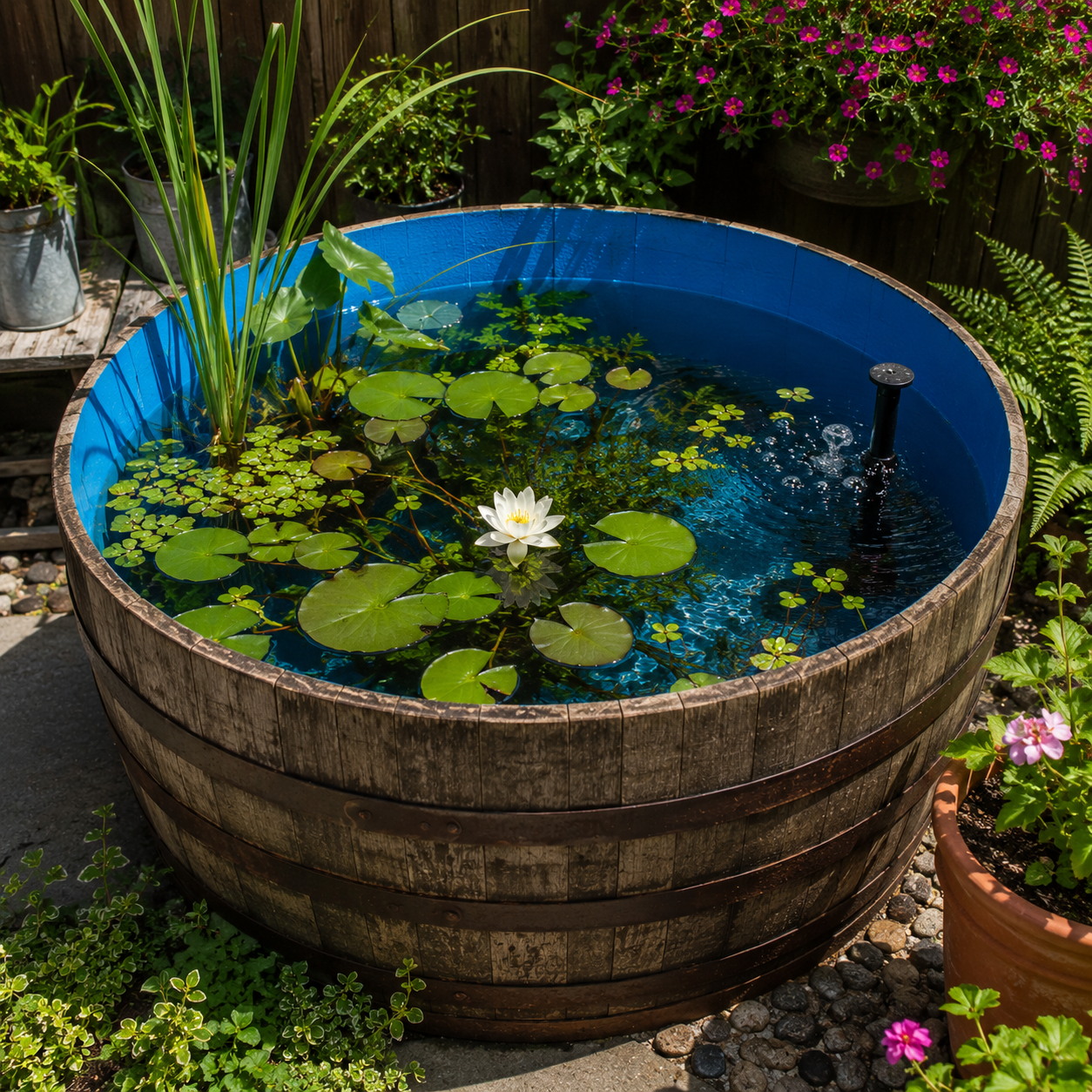
For homeowners with limited space, a half wine barrel pond can create a surprisingly beautiful miniature ecosystem. These small ponds work especially well on patios, near outdoor seating areas, or alongside gardens and walkways. A half barrel pond is ideal for aquatic plants, floating vegetation, and a few small fish. The sound of a small bubbler or fountain can instantly transform a patio into a more relaxing outdoor environment. Wood barrels naturally create a rustic aesthetic, but wood alone is not always ideal for long-term water containment. Depending on the barrel’s age and condition, the wood may eventually crack, dry out, leak, or affect water quality.
When properly prepared and fully cured, Pond Shield can help create a waterproof barrier inside compatible barrel-style ponds while preserving the unique visual appeal of the structure itself. Because these ponds are smaller, maintaining balance becomes even more important. Overstocking fish or placing the pond in direct all-day sunlight can quickly create algae and temperature problems. In most cases, smaller patio ponds perform best when they are treated more like miniature ecosystems than heavily stocked fish tanks.
Converting Existing Water Features Into Fish Ponds
Many fountains and decorative water features can also be converted into functional fish ponds if they are deep enough and capable of supporting proper filtration and circulation. Concrete fountains, decorative basins, troughs, and custom water features are all potential candidates for pond conversion. However, before adding fish, it is important to ensure the structure is fully waterproofed and safe for aquatic life. A properly prepared and cured Pond Shield coating can help transform leaking or aging water features into sealed pond environments that are easier to maintain long term. This type of project is especially appealing for homeowners who already have a decorative feature in place but want to add aquatic plants or fish without rebuilding the entire structure.
Why Waterproofing Matters
A pond ecosystem cannot stabilize if the structure itself is constantly leaking or deteriorating. Water loss affects everything. Fish become stressed, pumps can run dry, water chemistry fluctuates, and beneficial bacteria struggle to establish consistency. In many cases, pond owners focus heavily on filtration and algae control while overlooking the importance of the actual waterproofing system underneath. Whether someone chooses a flexible liner or a rigid coated structure, the goal is the same: create a stable environment capable of consistently holding water long term. For traditional dug ponds, a quality liner may be the best fit. For rigid structures like concrete ponds, stock tanks, fountains, and decorative basins, a properly applied waterproof coating system can provide another solution.
The Importance of Plants
Aquatic plants are one of the most important components of a self-sustaining pond. They help absorb excess nutrients from fish waste and decaying organic matter while also providing shade, oxygen, and shelter. A balanced pond usually includes a variety of plant types. Floating plants help block sunlight and compete with algae for nutrients. Submerged plants assist with oxygenation, while marginal plants around the edges help filter and stabilize the pond naturally.
Without enough plants, excess nutrients often feed algae instead. The goal is not to eliminate all algae completely. A small amount is normal in almost every healthy pond. The real objective is preventing uncontrolled algae blooms that turn the water green and unstable.
Beneficial Bacteria and Biological Filtration
Beneficial bacteria are what allow a pond ecosystem to function naturally over time. These bacteria colonize surfaces throughout the pond, including gravel, filter media, rocks, and plant roots. As fish produce waste, the bacteria help break down harmful ammonia into less toxic compounds. Without a healthy bacterial colony, even a beautiful pond can quickly become unsafe for fish. This is one reason new ponds require patience. A pond does not instantly become biologically balanced after it is filled with water. It needs time to cycle and mature. Over-cleaning can actually disrupt this process. Rinsing biological filter media with chlorinated tap water or aggressively sterilizing the pond can destroy beneficial bacteria and reset the ecosystem.
Fish Selection and Stocking
One of the most common mistakes pond owners make is adding too many fish too quickly. Goldfish are generally easier to manage in smaller ponds than koi because they produce less waste and require less water volume. Koi can become very large and place much heavier demands on the filtration system. Regardless of the species, moderation is important. A lightly stocked pond is far easier to maintain naturally than an overcrowded one. Fish should also be added gradually, especially in newer ponds. Giving the ecosystem time to adjust allows beneficial bacteria and plants to establish themselves properly before the biological load increases.
Oxygen and Water Movement
Even a natural-looking pond still needs oxygen and circulation. Moving water supports fish health, prevents stagnation, and helps beneficial bacteria thrive. This can be achieved through waterfalls, fountains, bubblers, aerators, pumps, or bog filtration systems. Even small patio ponds benefit from gentle water movement. For smaller setups like stock tanks or wine barrel ponds, a simple fountain or bubbler may be enough. Larger koi ponds typically require more substantial circulation and filtration systems to remain stable.
Natural Filtration With Bog Systems
Bog filters are one of the most effective ways to create a more natural self-sustaining pond system. A bog filter moves water slowly through gravel and aquatic plant roots where beneficial bacteria can colonize and process nutrients. The plants then absorb many of those nutrients directly from the water. Bog systems can be incorporated into traditional in-ground ponds, raised ponds, or even separate stock tank filtration systems. In many cases, they become one of the most visually attractive parts of the pond itself while quietly performing biological filtration in the background.
Thinking Beyond Traditional Pond Design
One of the most exciting things about modern pond building is that ponds no longer need to follow a single formula. Some homeowners want a traditional natural pond with rocks and waterfalls. Others prefer modern raised ponds with clean edges and viewing windows. Some want a tiny patio pond in a barrel, while others experiment with stock tanks, troughs, custom fountains, or integrated aquaponic systems. The important thing is creating a safe, waterproof environment that supports biological balance over time. That is where thoughtful design and proper waterproofing come together.
Where Pond Shield Fits Into the Process
Pond Shield was designed for projects where a durable waterproof barrier is needed on compatible rigid surfaces. This can include concrete ponds, fountains, waterfalls, stock tanks, decorative basins, raised ponds, and many other custom water feature applications. When properly applied and fully cured according to product instructions, Pond Shield creates a protective waterproof barrier that helps isolate the pond water from the structure underneath. For pond builders who want to think creatively beyond traditional liner ponds, this opens the door to a wide range of unique pond designs and custom aquatic environments.
Final Thoughts
A self-sustaining fish pond begins with balance, not just equipment. The structure must reliably hold water. Plants must help absorb nutrients. Beneficial bacteria need time to establish. Fish loads must remain reasonable. Oxygen and circulation must stay consistent. Whether the pond is built with a traditional liner, a custom concrete basin, a converted fountain, a stock tank, or a half wine barrel, the same principles apply. Build the pond carefully, waterproof it correctly, allow nature to do its work, and the result can become far more than a simple water feature. It can become a living ecosystem that improves, matures, and brings natural beauty to your backyard for years to come.