Prepare the Surface for Strong Adhesion
Proper surface preparation is one of the most important parts of a successful
Pond Shield installation. The coating must be applied over a surface that is
clean, dry, structurally sound, and properly textured so it can form a strong
mechanical bond.
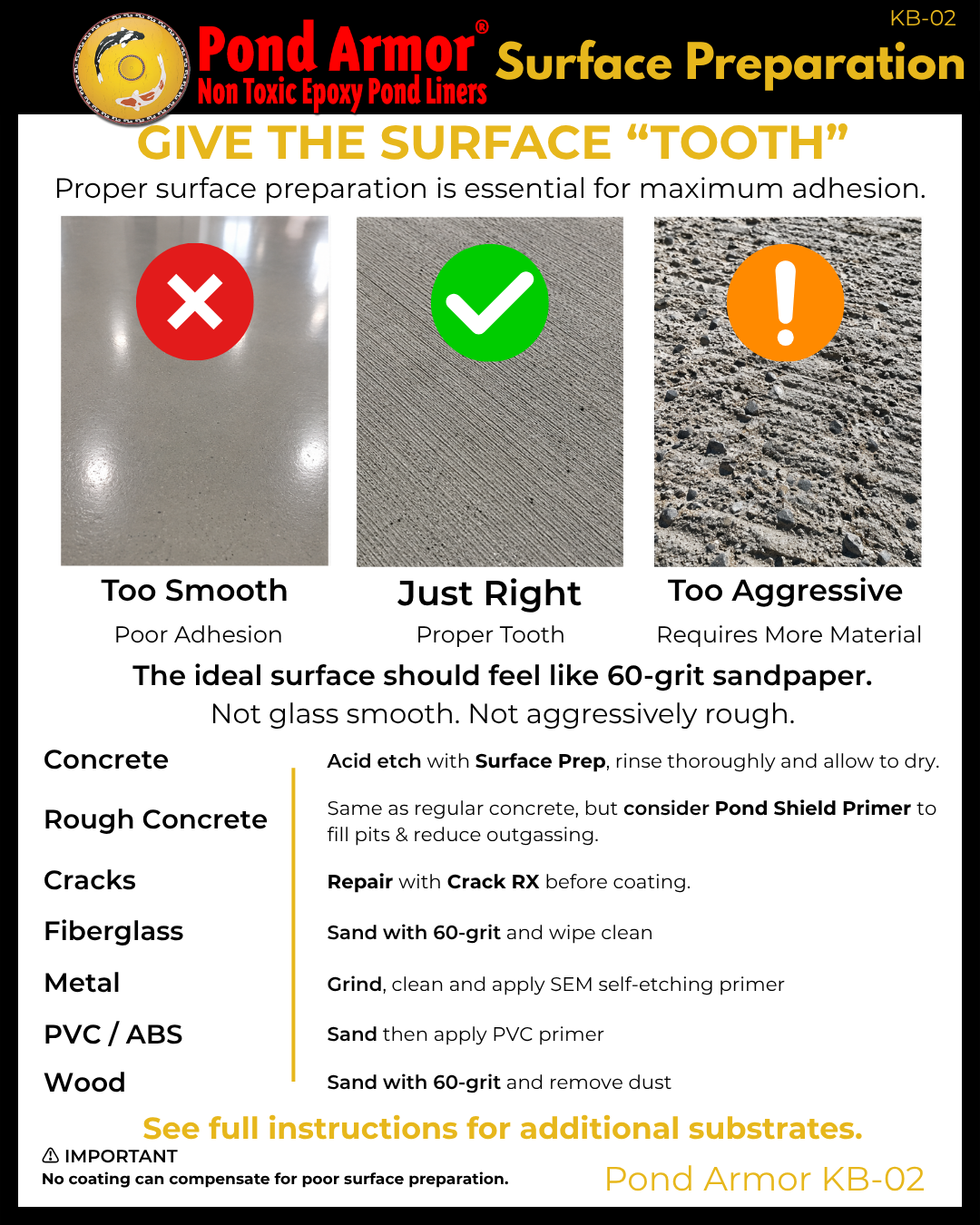
KB-02 explains the surface profile Pond Armor refers to as
“tooth.” It also provides a quick reference for preparing
several common substrates. Always review the complete Pond Shield Instructions
because preparation requirements vary by surface type.
What Is Surface “Tooth”?
Tooth is the textured, many-faceted surface profile that allows Pond Shield
to mechanically lock into place. A polished or glossy surface provides fewer
points for the coating to grip, which can reduce adhesion.
The ideal prepared surface should generally feel similar to
60-grit sandpaper. It should not feel glass-smooth, but it
should not be deeply gouged or aggressively uneven either.
- Too smooth: The surface may not provide enough mechanical
grip for proper adhesion. - Proper tooth: An even, consistently textured surface helps
Pond Shield form a strong mechanical bond. - Too aggressive: Deep grinding marks and excessive texture
can require more coating to achieve uniform coverage.
Clean and Dry the Surface
Surface texture is only one part of the preparation process. Before applying
Pond Shield, remove dust, grease, oil, wax, loose paint, laitance, debris, and
any other material that could interfere with adhesion.
The substrate must also be completely dry before coating. Water or moisture
remaining in pores, cracks, joints, or repairs can interfere with the
application and finished coating.
Complete all structural repairs before coating. Loose, deteriorated, or
unstable material should be repaired or removed so Pond Shield is applied
over a solid surface.
Prepare Concrete, Block, Brick, Rock and Stone
Grind down rough projections and repair damaged areas before cleaning the
surface. Concrete, block, brick, rock, and stone are generally acid etched
with
Pond Armor Surface Prep
,
thoroughly rinsed, and allowed to dry completely.
Smooth concrete, brick, rock, or stone may also require mechanical abrasion
so the finished surface has a consistent profile similar to 60-grit
sandpaper. Follow the product directions and complete Pond Shield
Instructions for the correct preparation procedure.
Prepare Fiberglass
Fiberglass should be sanded with approximately 60-grit sandpaper and wiped
clean. Sand evenly so glossy areas are removed and the entire surface has a
consistent texture.
Where appropriate, the sanded fiberglass may also be cleaned with an
automotive wax-and-grease remover. The surface must be free of sanding dust,
release agents, wax, grease, and other contamination before coating.
Prepare Untreated and Galvanized Metal
Untreated metals such as steel, aluminum, and iron should be ground with an
approximately 60-grit flexible sanding disc. The surface must have visible
tooth and be thoroughly cleaned before primer is applied.
Apply a suitable self-etching primer before coating with
Pond Shield. Pond Armor recommends SEM self-etching primer and advises
against Rust-Oleum self-etching primer because it may not perform reliably
with the coating.
Galvanized or treated metal also requires abrasion and cleaning. According
to the Pond Shield Instructions, the prepared surface should be etched with
full-strength white vinegar, wiped clean, and then coated with a suitable
self-etching primer.
Prepare PVC and ABS Plastic
PVC and ABS surfaces should be sanded with approximately 60-grit sandpaper
and wiped clean. Apply PVC primer approximately one to two minutes before
applying Pond Shield.
Because plastics can vary in composition and surface condition, follow the
complete Pond Shield Instructions and test the preparation method when
appropriate.
Prepare Wood
Wood should be structurally sound, dry, and stable before coating. Sand the
surface with approximately 60-grit sandpaper and remove all sanding dust.
Pond Shield should not be expected to stabilize rotten, loose, flexible, or
deteriorated wood. Repair or replace damaged material before beginning the
coating process.
Complete Repairs Before Coating
Cracks, gaps, joints, and other defects should be repaired before Pond Shield
is applied. Depending on the repair, Pond Armor products such as
Crack RX
and
may help create a stable repair surface before coating.
Rough or porous surfaces may also benefit from the appropriate Pond Shield
primer when recommended for the project. Review the product information and
complete instructions before selecting a primer or repair product.
Important: No coating can compensate for poor surface
preparation. Confirm that the surface is clean, completely dry, structurally
sound, and properly textured before mixing Pond Shield.
Continue Through the Pond Shield Knowledge Base
Review the earlier preparation guides or return to the Knowledge Base home.
KB-00: Before You Begin
KB-00A: Before You Mix Checklist
KB-01: Pond Shield Quick Start
Pond Shield Knowledge Base Home
Related Pond Shield Resources
Complete Pond Shield Instructions
Frequently Asked Questions
Pond Shield Application Videos
Pond Armor Product Line